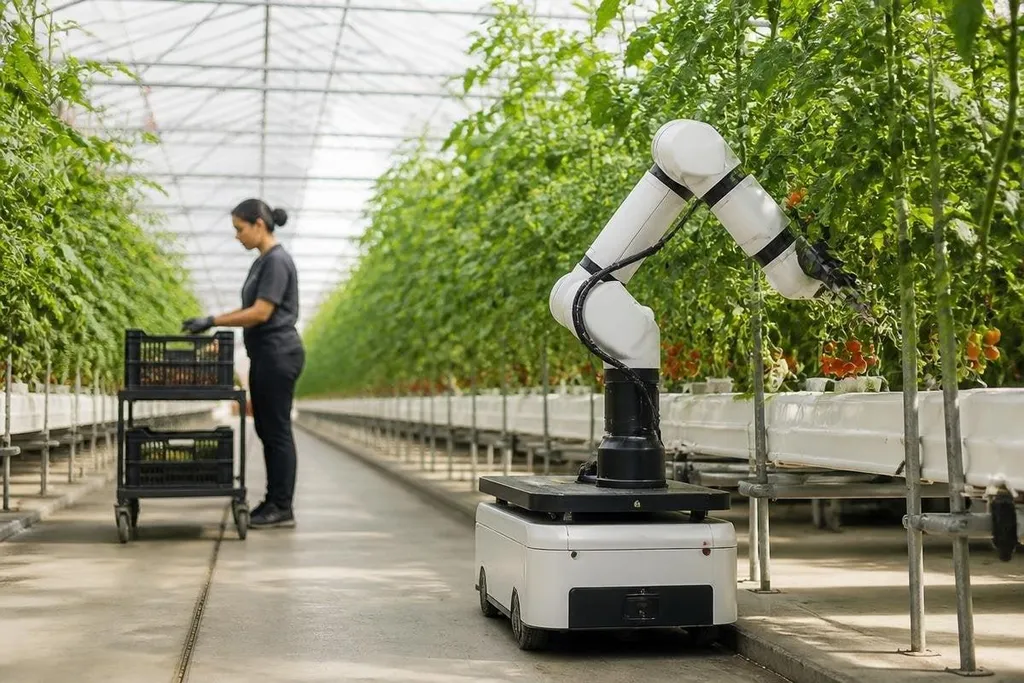
A greenhouse can grow crops through the year, but workers still move trays, inspect leaves, remove ripe fruit, and handle plants at different heights. Robots are now being built for those jobs, where fixed rows, repeatable routes, and controlled light give machines a clearer work area than an open field.
The useful question for an indoor farm manager is plain: which task can a robot finish safely, for enough hours, without slowing the crop?
- Plant movement: Mobile platforms can carry trays, bins, or tools between work areas.
- Crop checks: Cameras can look for plant size, color, gaps, and visible damage.
- Care work: Robotic arms can reach into rows for tasks such as picking or pruning.
Why greenhouses suit robots
Greenhouses give robots several fixed reference points. Rows stay in place, routes can be marked on the floor, and the machine can use cameras, wheel sensors, or LiDAR to locate itself. LiDAR measures distance with light pulses, helping a robot build a map of nearby rails, posts, plants, and people.
That setting reduces one hard problem found outdoors: changing ground. A greenhouse still has wet floors, narrow aisles, hanging cables, leaves, carts, and workers crossing the route. The robot must read those hazards while keeping enough space around the crop.
This is where the task matters more than the robot’s label. A platform carrying a tray has a different problem from an arm picking tomatoes. The first needs stable motion and safe stopping. The second needs a soft gripper, a camera view of the fruit, and a clear way to leave the plant undamaged.
The work robots can take on
Transport is often the clearest starting point. A mobile robot can move empty trays to a growing area and carry filled trays back to a packing point. That removes repeated walking from a worker’s shift, while keeping the route easy to inspect and change.
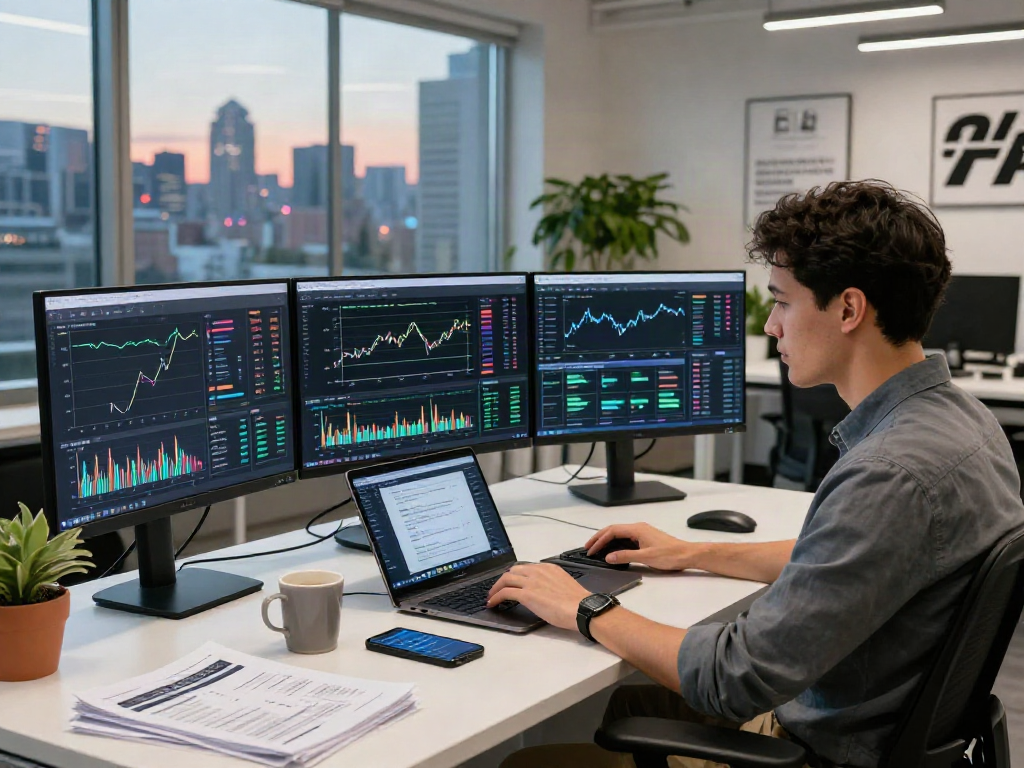
Inspection is another practical use. A camera mounted above or beside the plants can collect images at set points along a row. Software can compare those images over time and flag changes in leaf color, plant height, or empty spaces. A person still needs to check the cause, since a camera can spot a difference without knowing whether the cause is disease, water, light, or a damaged plant.
Harvesting asks more of the system. Fruit may be hidden by leaves, vary in size, or move when the plant is touched. The arm must find the stem or fruit, control its force, and place the crop into a container without bruising it. Those steps turn a neat demonstration into a production test.
A grower comparing greenhouse robots needs reports that connect a picking result to the crop and the work left for staff. Greenhouse robotics reports from Robot24.com can show that record before the next section tests where these systems fail.
Where the limits remain
The growing space is controlled, but it is not uniform. Plants grow at different speeds, rows become crowded, and water can leave surfaces slick. A robot that works well beside young plants may need a different route once leaves reach the aisle.
Picking also has a narrow margin for error. A missed fruit may reduce output, while a damaged plant can affect later harvests. That makes recovery just as important as the first movement. The system needs a safe stop, a way to report a failed pick, and a clear handoff to a worker.
Data brings another limit. A camera system needs examples from the farm’s crops, lighting, growth stages, and common defects. A model trained on one greenhouse may need new checks before it works in another. Robot makers can state what their software detects, but a farm manager still needs results from the actual crop and route.
I'd judge a greenhouse robot by the hours it runs on real rows, the number of worker interventions, and the crop it leaves intact. A short demo can show that the arm moves; it cannot show the cost of keeping that arm clean, charged, repaired, and useful through a full growing cycle.
A buying checklist for indoor farms
Use these points before a pilot starts:
- Name one task: Set a clear job, such as tray movement or crop inspection.
- Measure the route: Record aisle width, turning space, floor condition, and charging points.
- Set a handoff rule: Decide when the robot stops and calls a worker.
- Check crop contact: Test whether wheels, arms, or grippers damage leaves and fruit.
- Count interventions: Log every manual reset, blocked route, failed pick, and missed image.
- Price the full shift: Include charging, cleaning, software, repairs, and worker time.
A sensible pilot starts with a repeatable route and a visible result. If the robot can move a known load, stop near people, report faults, and finish the route across changing crop stages, the farm has a basis for a larger test.
If it cannot, a more complex picking task will only hide the problem until it costs more.